The Beautiful Country of Phillippines
The Philippines is a Southeast Asian country in the Western Pacific, comprising more than 7,000 islands. Its capital, Manila, is famous for its waterfront promenade and centuries-old Chinatown, Binondo. Intramuros, a walled city in colonial times, is the heart of Old Manila. It’s home to the baroque 17th-century San Agustin Church as well as Fort Santiago, a storied citadel and military prison.
HISTORY
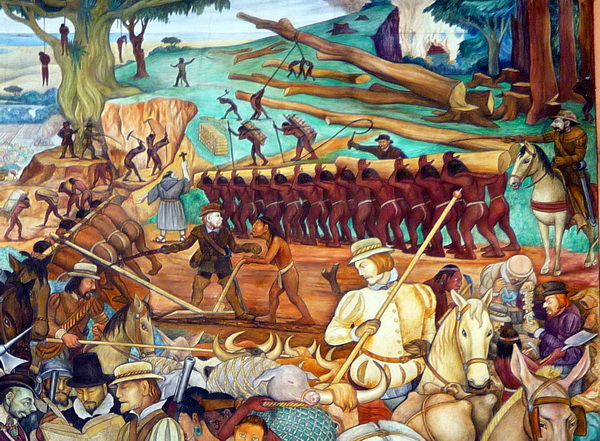
The history of the Philippines from 1521 to 1898, also known as the Spanish colonial period, was a period during which Spain controlled the Philippine islands as the Captaincy General of the Philippines, initially under New Spain until Mexican independence in 1821, which gave Madrid direct control over the area.

CULTURE AND TRADITION
The culture of the Philippines comprises a blend of traditional Filipino and Spanish Catholic traditions, with influences from America and other parts of Asia. The Filipinos are family oriented and often religious with an appreciation for art, fashion, music and food.
The culture of the Philippines comprises a blend of traditional Filipino and Spanish Catholic traditions, with influences from America and other parts of Asia. The Filipinos are family oriented and often religious with an appreciation for art, fashion, music and food.

RELIGION
Religion in the Philippines. The Philippines proudly boasts to be the only Christian nation in Asia. More than 86 percent of the population is Roman Catholic, 6 percent belong to various nationalized Christiancults, and another 2 percent belong to well over 100 Protestant denominations.

TOURIST SPOTS
Tourism is an important sector for Philippine economy. ... The country is known for having its rich biodiversity as its main tourist attraction. Its beaches, heritage towns and monuments, mountains, rainforests, islands and diving spots are among the country's most popular tourist destinations.
1.Tubbataha Reef
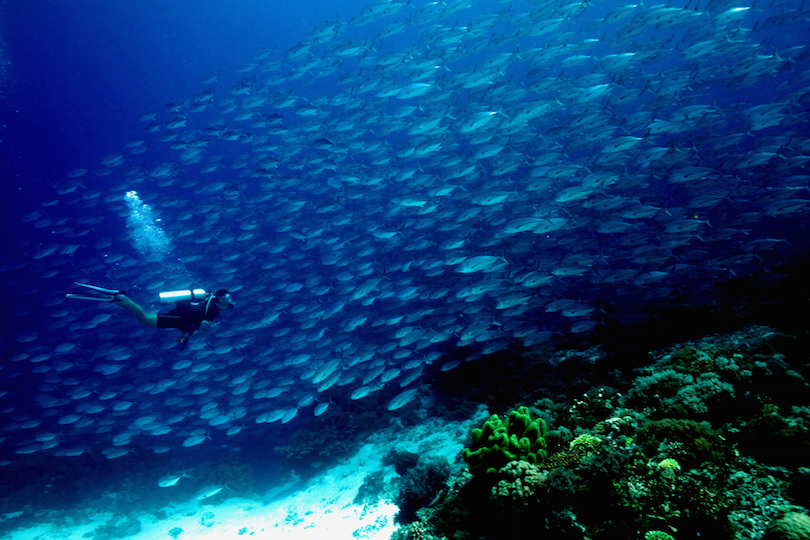
The Tubbataha Reef in the Sulu Sea is a marine sanctuary protected as the Tubbataha Reef National Marine Park. The reef is made up of two atolls, North Atoll and South Atoll, separated by a deep channel of approximately 5 miles (8 km) wide. It has become one of the most popular dive sites in the Philippines because of its coral walls where the shallow coral reef abruptly ends giving way to great depths. The marine park is open to live-aboard diving excursions between the months of April to June when the waves are most calm.
2. San Agustin Church, Manila
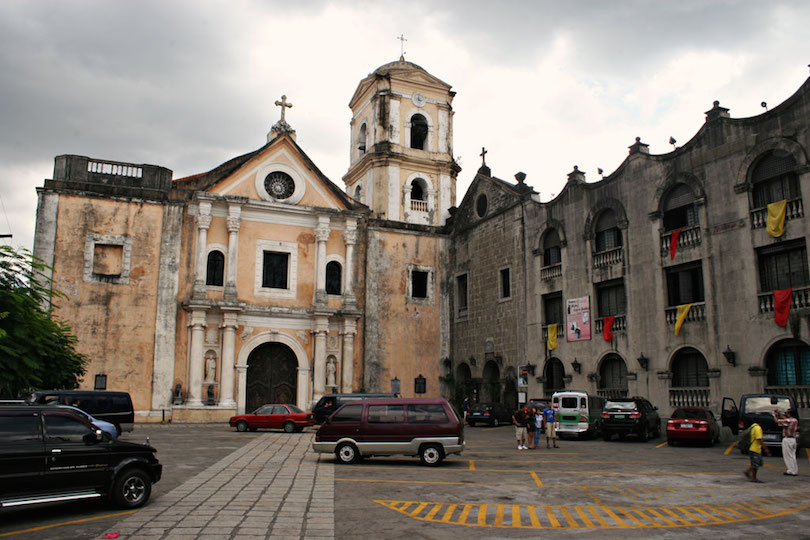
Located in Manila, a visit to the San Agustin Church is a must see. Built in 1589, this beautiful church has survived seven earthquakes and two fires over the centuries and now remains as the oldest stone church in the Philippines. At the main entrance, there are exquisite carvings on the wooden doors. Inside the lovely, Mexican-influenced interior is designed in the shape of a Latin cross. The gorgeous ceiling was painted in the 1800s by Italian artists, Giovanni Dibella and Cesare Alberoni.
3. Mayon Volcano

Rising more than 8,000 feet (2,400 meters) above sea level, Mayon Volcano is significant for its perfectly symmetrical cone shape. Visitors can enjoy a number of activities here such as camping, climbing, hiking, bird watching and photography. A picturesque spot in which to admire Mayon Volcano is from the nearby Cagsawa ruins. Mayon is the most active volcano in the Philippines, having erupted over 49 times in the past 400 years. The most destructive eruption of Mayon occurred on February 1, 1814 bombarding the nearby towns with volcanic rocks. The belfry and what is left of the baroque church that was destroyed by the 1814 eruption can still be seen.
4. Malapascua Island
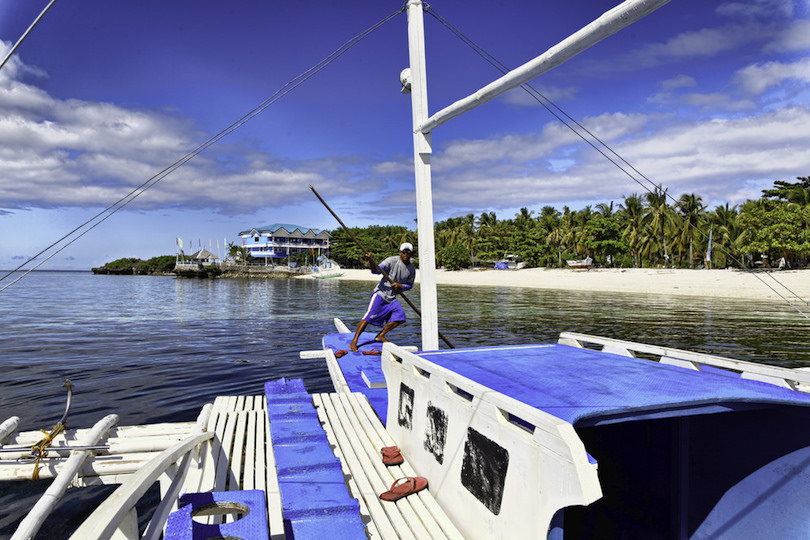
A small island made up of quiet fishing villages, Malapascua Island is popular for its ideal diving spots and for being the only place in the world to see thresher sharks on a regular basis as well as manta rays and hammerheads. The other hidden gems here are the beautiful, sandy white beaches, crystal clear waters bordered by coconut trees and colorful coral gardens.
5. Puerto Galera

Just south of Manila is the charming coastal town of Puerto Galera, well-favored for its gorgeous beaches, excellent diving spots and wide diversity of marine species. The most popular beaches are White Beach and Sabang Beach, which also offer nearby shopping, dining, nightlife and hotel accommodation. Another popular attraction is the natural harbor of Muelle Bay with its rows of shops, restaurants and bars. Visitors can also go snorkeling to see some of Asia’s best coral reefs or dive among old shipwrecks and hundreds of fish species.
6. Puerto Prinsesa Underground River
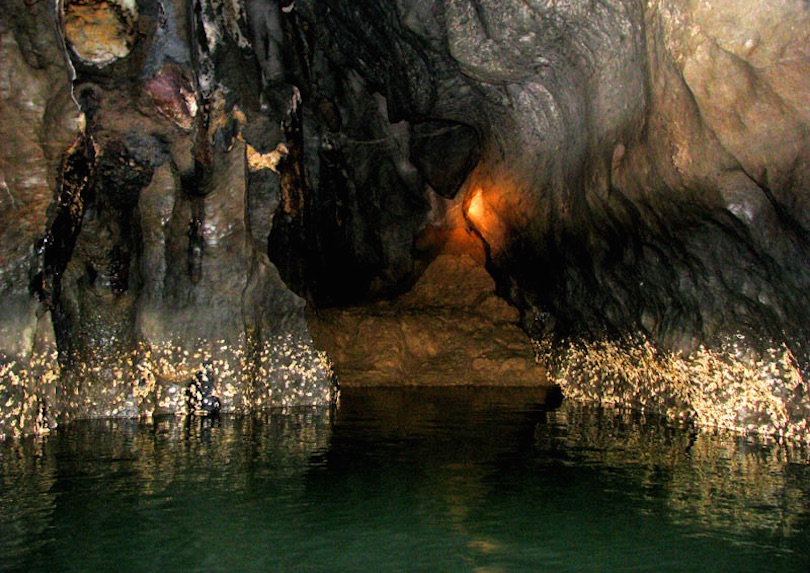
Located on the northern coast of the island of Palawa, Puerto Princesa is a nature lover’s paradise. Home to unspoiled landscapes rich in wildlife, this lovely town also lays claim to one of the world’s most unique natural phenomena, an underground river known as the Puerto Princesa Subterranean River. Protected within a national park, this natural wonder is the world’s longest navigable underground river. Guided paddle boat tours show intriguing rock formations and fluttering bats.
7. Donsol

Located in the province of Sorsogon, a place of pristine beaches, stunning waterfalls and unexplored caves, the sleepy fishing village of Donsol is the place in the Philippines to see whale sharks. The ocean’s gentle giants can be seen between November and June, with the numbers peaking between February and May. Tourists can also take a boat cruise along the Donsol River through mangrove and palm trees, and watch the night light up with millions of sparkling fireflies. If that’s not enough, a traditional shrimp-catching expedition with bamboos and nets, followed by a tasty dinner of the cooked catch is also available.
8. Chocolate Hills
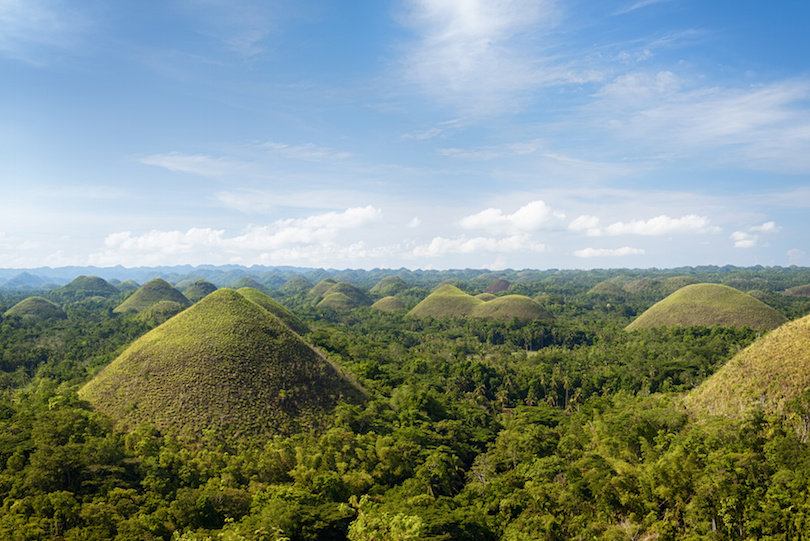
One of the top tourist attractions in the Philippines, The Chocolate Hills are unusual geological formations that consists of at least 1,268 individual mounds scattered throughout the interior of the island of Bohol. The almost symmetrical and same-sized formations range from 98 to 164 feet (30 to 50 meters) high and are covered in green grass. During the dry season the grass turns brow, hence the name. There is no consensus on how these giant mole hills were formed. One theory holds that the Chocolate Hills are the weathered rock formations of a kind of marine limestone on top of an impermeable layer of clay.
9. Boracay
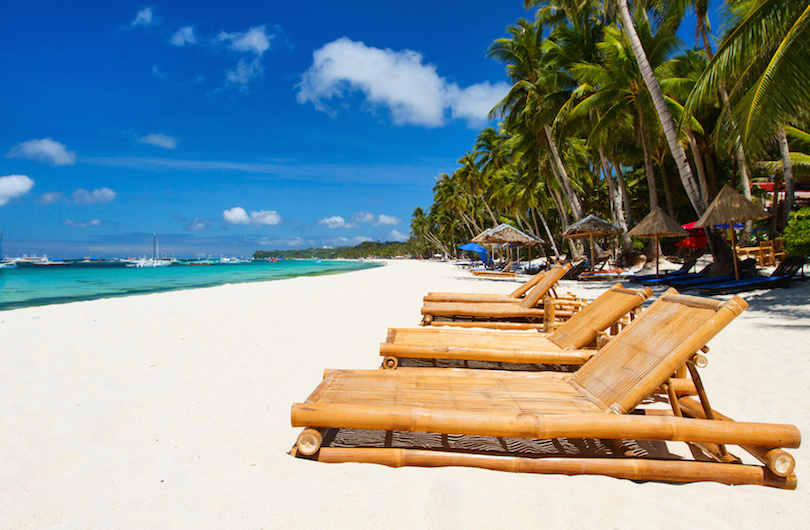
Boracay may be a small island, but it packs great features such as award-winning beaches, beautiful resorts and great adventures like cliff diving, parasailing, motorbiking, horse riding, snorkeling, kite surfing and scuba diving. If that is not enough, boat tours allow visitors to watch stunning sunsets, explore volcanic caves and remote coves of turquoise lagoons. When the sun sets, Boracay night-life pulsates with many bars and restaurants serving food, drinks and fun until dawn.
10. Banaue Rice Terraces
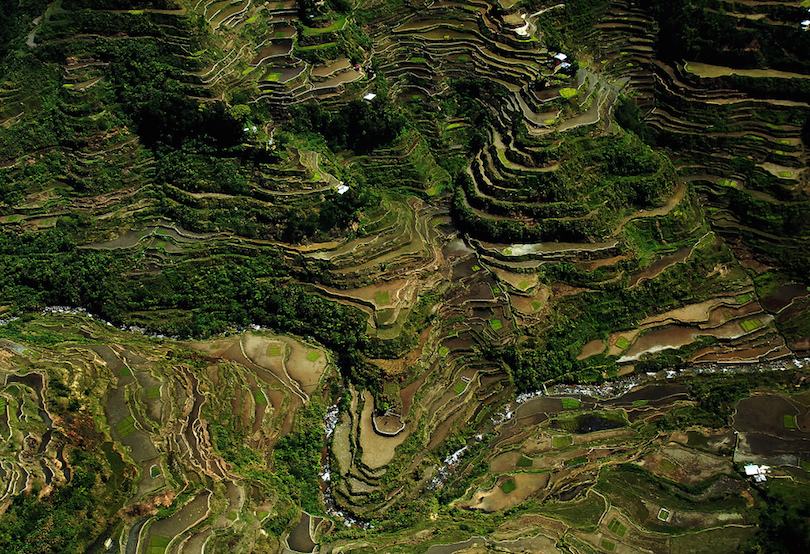
No trip to the Philippines could be complete without seeing the spectacular Banaue Rice Terraces. Carved from the mountain ranges about 2,000 years ago without modern tools by the Ifugao tribes, these magnificent farm terraces resemble giant steps reaching up to the sky. Locals to this day still plant rice and vegetables on the terraces, although more and more younger Ifugaos do not find farming appealing and emigrate to the cities.
